September 25, 2026
BlogMicrosoft Shows Off Its New Copilot ‘Super App’

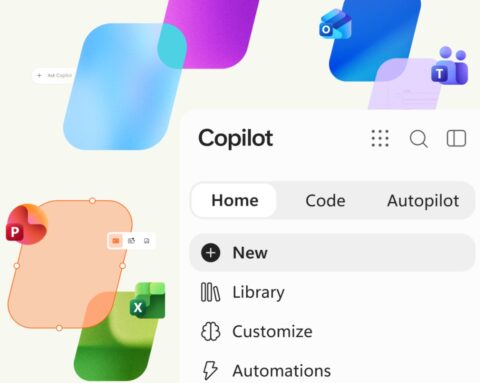
Microsoft took the wraps off the coming user experience for its latest iteration of its Copilot app on Sept. 25. Previously known as the Copilot “Super App,” the updated app converges the previously separate consumer Copilot and Microsoft 365 Copilot apps into a single Copilot-branded app with a tabbed user interface, offering access to a variety of AI-assisted modes.
Like similar super app offerings from OpenAI and Anthropic which have launched in recent weeks, Microsoft’s Copilot app is meant to try to keep customers from straying outside a single unified environment providing chat, cowork, coding, and document handling, among other tasks. Even though Microsoft is pushing the Copilot app as the best way to access its AI-at-work functionality, it will continue to allow customers to use Copilot Chat and Copilot in Office directly, as they do now, without using the app.
“Just as Office defined productivity for the PC era, Copilot is defining work for the AI era,” said Jared Spataro, Microsoft’s Chief Marketing Officer, AI at Work, in a blog post about the new Copilot app.
Microsoft will deliver the updated Copilot App in a piecemeal way over the coming weeks. It kicked off the rollout in August by announcing its plans to merge its consumer and commercial Copilot experiences via a single app, which it has been rolling out over the past several weeks.
The new Copilot app will feature several tabs: Home, Code, and Autopilot. The Home tab includes a merged Cowork/Tasks and Chat experience. (Anthropic just a week ago also merged its Claude Cowork and Chat experiences.) Code, built on the “same underlying technology as GitHub Copilot,” is designed for users who want to build small, dedicated apps without having to know how to code. Autopilot is the new name for the Microsoft Scout OpenClaw-based, long-running agent that Microsoft has been testing over the past several months.
The Home and Code capabilities will start rolling out through Microsoft’s Frontier test program “in the coming weeks.” Code is rolling out to Frontier testers at the end of September and will be broadly available for enterprise customers “in the coming weeks.” Autopilot is moving to “private preview” by the end of Sept.
Microsoft is looking to make moving between experiences more seamless. “Coming soon,” according to Microsoft, customers won’t need to choose a mode or tab within the app; they will be able to state their desired outcomes, and Copilot will route the work to the appropriate capability (as Claude does with its new unified app design).
The updated Copilot app also is getting a feature called “Office in Copilot,” which will provide customers with “the full power” of Word, Excel and PowerPoint inside Copilot. Microsoft officials said Office in Copilot is not just a viewer; it’s a way for customers to interact with those main Office apps right inside Copilot.
Just to be (un)clear: Office in Copilot is not the same as Copilot in Office – which is a set of capabilities which have been available to certain Microsoft 365 customers for a while. Copilot in Office allows users to invoke AI from inside their apps rather than providing access to the Office apps from within an AI assistant, which is what Office in Copilot is meant to do. Those using Office in Copilot will be able to collaborate in real time with people using the full versions of the existing Outlook apps, officials said.
Pricing and Licensing Tweaks Ahead
Microsoft is making some refinements around how pricing and licensing will work with the new Copilot. On the pricing front, Microsoft will offer customers a per-user/per-month User Subscription License (like paid Copilot has in the past) plus Usage-Based Billing (UBB).
Since launch, Microsoft 365 Copilot has cost $30 per user per month. We asked Microsoft if it plans to change this User Subscription License (USL) price but didn’t receive a reply back. The USL for the new Copilot app includes Copilot in Chat and across Word, Excel, PowerPoint, Outlook and Teams; model selection; and new capabilities and models, with the “Auto” capability routing requests to the best model based on accuracy, speed and cost.
Those wanting to use Copilot for “agentic work” will need to pay additional UBB costs in order to get full control on choosing models. UBB using Copilot Credits will be required for Cowork, Code, Autopilot, frontier models like Astra and Fable. UBB fees are additive to the base Copilot USL.
Microsoft officials have been saying for a while now that certain kinds of agents, especially ones that are long running like Scout/AutoPilot, will need their own Entra IDs, email and Teams accounts and more. We’ve asked for more details on how pricing and licensing will work for Autopilots (both the Scout one and future Autopilots from Microsoft, other software vendors, and customers) and were told that all Microsoft is ready to share is that UBB fees will be incurred.
Bonus Round: More Copilot Questions Answered (and Not)
Here are a few more tidbits related to today’s Copilot app announcement. We asked a bunch of questions and got a few answers.
More Models in Cowork: When Microsoft talked about Cowork, its M365 agent that takes action, expanding model choice options back in June, Microsoft said it planned to provide its own model for Cowork alongside Anthropic’s and OpenAI’s models. You called it Cowork 1. Is this still coming? What about other third-party models?
We remain focused on delivering high-quality, cost-efficient models that can handle a wide variety of Copilot tasks, including in Cowork, while meeting our standards for performance, security and enterprise readiness. As our work has progressed, we have continued evaluating a range of model options and approaches as part of our broader multi-model strategy. We don’t have any updates to share today, but we’ll let you know when we do.
Code vs. Power: What’s the positioning of Copilot Code vs. Microsoft’s current low/no-code solutions like Power Apps and Power Automate?
Copilot Code does not replace Power Apps or Power Automate. While these experiences can address similar business problems, they begin from different development models and support different workflows. Copilot Code is a code-first experience in Microsoft Copilot. Users describe what they need, build from work context when permitted, and create software projects that can run locally or in the cloud. Power Platform is a structured low-code platform for canvas and model-driven applications, intelligent automation, and web portals – with Dataverse and Power Platform administration and lifecycle capabilities.
Consumer/Enterprise Guardrails: What is the mechanism that will keep consumer/enterprise permissions and licenses separate in the new combined Copilot app?
The boundaries that keep work and personal separate remain firmly in place — personal accounts (MSA) and work accounts (Entra) are distinct by design, so personal data can’t reach your tenant, and your enterprise data can’t cross the other way. Bringing our experiences together will allow us to innovate and add value more rapidly — without changing the trust model you depend on.